lunes, 1 de junio de 2026

Unit 6: We use technology responsibly

📞🔬💻 UNIT 6: WE USE TECHNOLOGY RESPONSIBLY 🔧🔨🔦


VOCABULARY:
  • Simple machines = máquinas simples (herramientas).
  • Lever = palanca.
  • Ramp = rampa.
  • Wheel = rueda.
  • Pulley = polea.
  • Complex machines = máquinas complejas.
  • Toaster = tostador.
  • Mixer = batidora.
  • Dishwasher = lavavajillas.
  • Oven = horno.
  • Fridge = frigorífico.
  • Kettle = tetera eléctrica.
  • Wind = viento.
  • Electricity = electricidad.
  • Sunlight = luz del Sol.
  • Petrol = gasolina.
  • Handlebars = manillar.
  • Saddle = sillín.
  • Chain = cadena.
  • Frame = marco de la bici.
  • Keyboard = teclado.
  • Screen = monitor.
  • Mouse = ratón.


Theory:


Tools and machines make our life easier. Tools or simple machines have only a few parts (one or two). Complex machines have many different parts.


Tools and machines need energy to work. It can be with human energy, petroleum or electricity.


We can use computers for looking for information, watching films, writing e-mails, playing videogames and communicating with people all around the world.


Automatic machines work without the help of the people. Manual machines work with the hands of the people.


We must be careful with sharp tools and electric machines that are hot. We can’t use electric machines next to the water.


Videos:


Games and activities:


    martes, 21 de abril de 2026

    Unit 5: We recycle materials

    💎📕 UNIT 5: WE RECYCLE MATERIALS 👕👢


    VOCABULARY:
    • Fabric = tela.
    • Glass = vidrio, cristal.
    • Rubber = goma, caucho.
    • Marble = mármol
    • Wool = lana.
    • Leather = piel, cuero.
    • Cotton = algodón.
    • Wood = madera.
    • Plastic = plástico.
    • Metal = metal.
    • Silk = seda.
    • Gold = oro.
    • Oil = petróleo.
    • Sand = arena.
    • Hard = duro.
    • Soft = blando.
    • Rough = áspero.
    • Smooth = liso.
    • Flexible = flexible.
    • Rigid = rígido.
    • Strong = fuerte.
    • Fragile = frágil.


    MATERIALS

    These are some of the materials we use the most:

    Fabric


    Glass


    Rubber


    Wool


    Wood


    Plastic


    Metal


    Materials have different properties.


    • They can be soft, like wool. They can be hard, like wood or metal.
    • They can be flexible. It means they bend without breaking, like fabric and wool.
    • They can be elastic, like rubber. They stretch.
    • They can be transparent, like glass, because we can see through it. If they aren't transparent, they are opaque.


    Some videos:

    miércoles, 4 de marzo de 2026

    Unit 4: We protect plants

    🌱🌷🌼 UNIT 4: PLANTS🌴🌵🍃

    Vocabulary:

    • Soil: tierra.
    • Water: agua.
    • Air: aire.
    • Tree: árbol.
    • Bush / shrub: arbusto.
    • Grass / herb: hierba.
    • Sunlight: luz del Sol.
    • Flower: flor.
    • Stem: tallo.
    • Trunk: tronco.
    • Leaves: hojas.
    • Roots: raíces.
    • Fruit: fruto.
    • Seed: semilla.
    • Flowering plants: plantas con flor.
    • Non-flowering plants: plantas sin flor.
    • Deciduous trees: árboles de hoja caduca.
    • Evergreen trees: árboles de hoja perenne.
    • Conifers: coníferas.
    • Needles: hojas de los pinos (tamujas).
    • Cones: piñas.
    • Treetop: copa del árbol.


    What do you know about plants?

    Plants are living things.


    What are plants like?

    Esta es la PRESENTACIÓN que hemos utilizado en clase para repasar las partes de las plantas y ver cuáles son las funciones de cada una de ellas. 


    Games:

    The reason for a flower, by Ruth Heller.  


    How are plants different?


    Presentación "Trees, shrubs and herbs": click para descargar.


    Games:


    Games:


    How do flowering plants reproduce? 


    Presentación "Plant reproduction"click para descargar.

    Games:

    Non-flowering plants


    Presentación "Non-flowering plants"click para descargar.

    Non-flowering plants: conifers

    Non-flowering plants: ferns and mosses


    Games:

    Non-flowering plants (palabra -dibujo)

    Ferns and mosses (completar texto)

    Plant reproduction


    Wild and cultivated plants


    Presentación "Wild and cultivated plants"click para descargar.


    Examples: 

    Parts of the plants we eat (repaso 1ºEP) 🌿🌻🌽🍊

    Presentación "Parts of the plant we eat": click para descargar

    We can eat different parts of a plant:

    • When we eat carrots, we are eating the roots.
    • When we eat asparagus, we are eating the stem.
    • When we eat lettuce, we are eating the leaves
    • When we eat broccoli and cauliflower, we are eating the flowers.
    • When we eat sunflower seeds, we are eating the seeds.  

    Game: parts of the plant we eat


    What do we get from plants? (Repaso de 1ºEP)


    Presentación "Things we get from plants": click para descargar.


    Teoría del libro (libro antiguo)


    domingo, 1 de febrero de 2026

    Unit 3: We like animals

    🐈🐍🐓🐠 ANIMALS 🐳🐢🐞🐬


    Vertebrates and invertebrates

    There are two large groups of animals: vertebrates and invertebrates.


    Games:

    Vertebrates and invertebrates.

    Vertebrates and invertebrates (completar oraciones)

    The skeleton gives bodies their shape:  Find the skeleton


    Vertebrate animals 


    There are five groups of vertebrates.


    Esta es la PRESENTACIÓN que hemos utilizado en clase para introducir o repasar los contenidos. Podéis descargarla aquí.

    Vertebrates: mammals, birds, fish, amphibians and reptiles. 


    Si lo preferís, podéis ver cada vídeo por separado:


    Games: 

    Anagrama vertebrates

    Which vertebrate?

    Which vertebrate? II

    Which vertebrate? (cada oveja con su pareja)

    Which vertebrate? (choose the right answer)

    Anagrama body coverings

    How do vertebrates cover their bodies? (diagrama)


    Mammals🐄🐅🐆🐇🐈🐋🐎🐐🐑🐒🐕🐖🐗🐘🐨🐪

    Mammals (Smile and Learn video) 


    Here's a quick, one minute video about mammals and milk.


    Si queréis aprender qué animal mamífero es el más rápido, cuál es el más grande, el más alto...,  no dejéis de ver el siguiente vídeo.

    Amazing facts about animals


    Picture dictionary: African mammals


    Birds 🐔🐓🐤🐦🐧


    Examples of birds: picture dictionary

    Games:

    Birds vocabulary (une las parejas) (No necesitan aprender todos los nombres). 

    Body parts (diagrama)


    Why can parrots talk?


    Aquí tenéis un ejemplo de actividad que aparece en el libro: 

    Index card

    Si queréis practicar un poco más, podéis elegir un mamífero u otro ave diferente y completar alguna otra tarjeta. Aquí os dejo una plantilla en blanco.


    Fish 🐟🐠🐡


    Fish breathe underwater using their gills. The water passes through their gills. They take the oxygen they need from the water.


    Games:

    Diagrama mammals, birds and fish


    Amphibians 🐸 and reptiles 🐊🐍


    Picture dictionary: amphibians and reptiles


    Life cycle of a frog (diagrama 2)


    Reptiles versus amphibians

    Reptiles (completar texto)

    Reptiles hangman

    Reptiles aplastatopos

    Reptiles memory


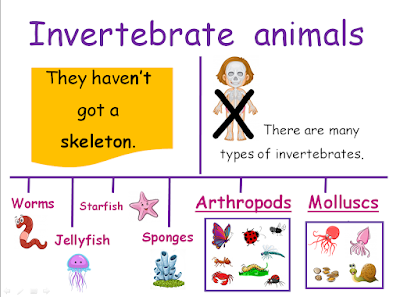
    🐞🐝🐜 Invertebrate animals🐛🐚🐚🐙


    Presentación Invertebrates: click para descargar.

    Arthropods


    Herbivores, carnivores and omnivores


    Viviparous and oviparous animals

    Esta parte ya no entra en el tema, pero dejo los vídeos por si alguien los quiere ver. Es material del año pasado.

    Viviparous and oviparous

    Aquí tenéis un libro en el que podéis ver montones de animales que nacen de huevos. Chickens 🐔🐣🐥 aren't the only ones! 🐊🐌🐍🐓🐙🐛🐜🐝🐞🐟🐠🐡🐢🐦🐧🐸.